
The refrigerator is the heart of your kitchen, but it is often the most neglected appliance when it comes to maintenance and organization. If you aren't managing it correctly, you aren't just wasting groceries—you might be compromising your food safety.
Whether you're looking to reduce food waste or simply keep your fridge running more efficiently, these 10 golden rules will change the way you manage your kitchen staples.
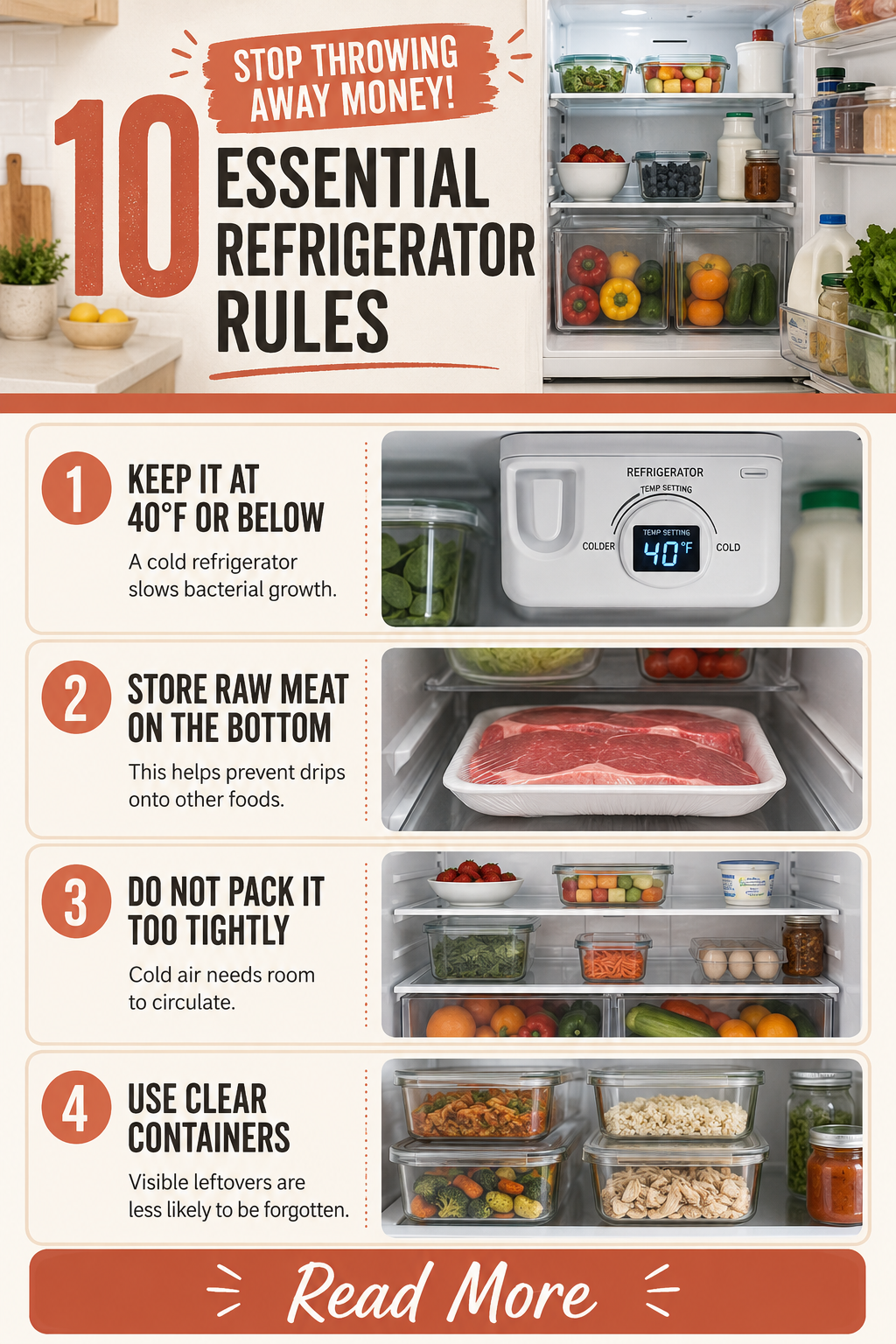
Your Refrigerator Needs These 10 Rules: The Ultimate Guide to Food Safety and Freshness
1. Keep It at 40°F ($4.4°C$) or Below
Food safety begins with temperature control. Your refrigerator should always be set at or below 40°F ($4.4°C$). This temperature range effectively slows the growth of bacteria, keeping your perishables safe for longer. Invest in a simple fridge thermometer to ensure your appliance is staying in the "danger-free" zone.
2. Store Raw Meat on the Bottom
Never store raw meat, poultry, or seafood on the top or middle shelves. Always place these items on the bottom shelf, ideally in a sealed container or on a tray. This prevents juices from dripping onto your fresh produce or ready-to-eat leftovers, eliminating the risk of cross-contamination.
3. Do Not Pack It Too Tightly
It is tempting to cram groceries into every available corner, but airflow is essential for a cold fridge. Your refrigerator works by circulating chilled air; if it’s packed too tightly, that air can't move, leading to "hot spots" where food spoils faster. Keep your shelves organized with enough space for air to flow freely.
4. Use Clear Containers
If you can’t see it, you’ll likely forget it until it’s too late. Switching to clear glass or plastic storage containers makes it easy to see exactly what you have on hand. It reduces the chance of leftovers hiding in the back until they become a science experiment.
5. Label Leftovers with Dates
It’s easy to think, "I’ll remember when I made this," but by day three, that memory usually fades. Use a bit of masking tape and a marker to note the date on your containers. This simple habit helps you prioritize what needs to be eaten first, significantly reducing food waste.
6. Check the Door Seal
The rubber gasket around your fridge door is what keeps the cold in and the heat out. If the seal is loose or cracked, your fridge has to work harder to maintain temperature, which increases your energy bill and compromises food freshness. If a dollar bill can easily slide through the closed door, it's time to replace the seal.
7. Clean Spills Quickly
A small leak today can become a sticky, smelly mess tomorrow. Dried-on spills are much harder to remove and can harbor bacteria. Keeping a pack of multi-purpose wipes or a damp microfiber cloth nearby makes it easy to handle minor spills the moment they happen.
8. Do Not Store Milk in the Door
The door is the warmest part of your refrigerator because it is exposed to room temperature every time you open the fridge. To keep milk, cream, and other highly perishable dairy products fresh, store them on a main shelf toward the back, where the temperature remains the most consistent.
9. Follow the Two-Hour Rule
Perishable food should never be left out at room temperature for more than two hours. Once your meal is finished, pack up your leftovers and get them into the fridge promptly. This prevents the "danger zone"—the temperature range where bacteria multiply most rapidly.
10. Check It Once a Week
Make "Fridge Audit Day" a part of your weekly routine, perhaps the evening before your grocery run. Take a few minutes to toss out anything that has spoiled, check for leaking containers, and consolidate items. Starting the week with an organized, clean fridge makes meal planning much easier.
Final Thoughts
Proper refrigerator management is the secret to a stress-free kitchen. By following these 10 rules, you’ll save money by wasting less food, keep your ingredients fresher for longer, and ensure your family is eating in a safe, hygienic environment. A little maintenance goes a long way!
What is the one item you always find hiding in the back of your fridge?
Leave a Reply