
We’ve all been there: dinner is over, you’re feeling satisfied, and the last thing you want to do is clean up. It’s tempting to leave the pots on the stove or toss everything into a single large container to deal with later. However, how you handle your leftovers is just as important as how you cook your meal.
Proper storage is the best way to prevent foodborne illness and reduce kitchen waste. If you want to keep your meals fresh and safe, follow these 10 essential rules before you tuck those leftovers away.
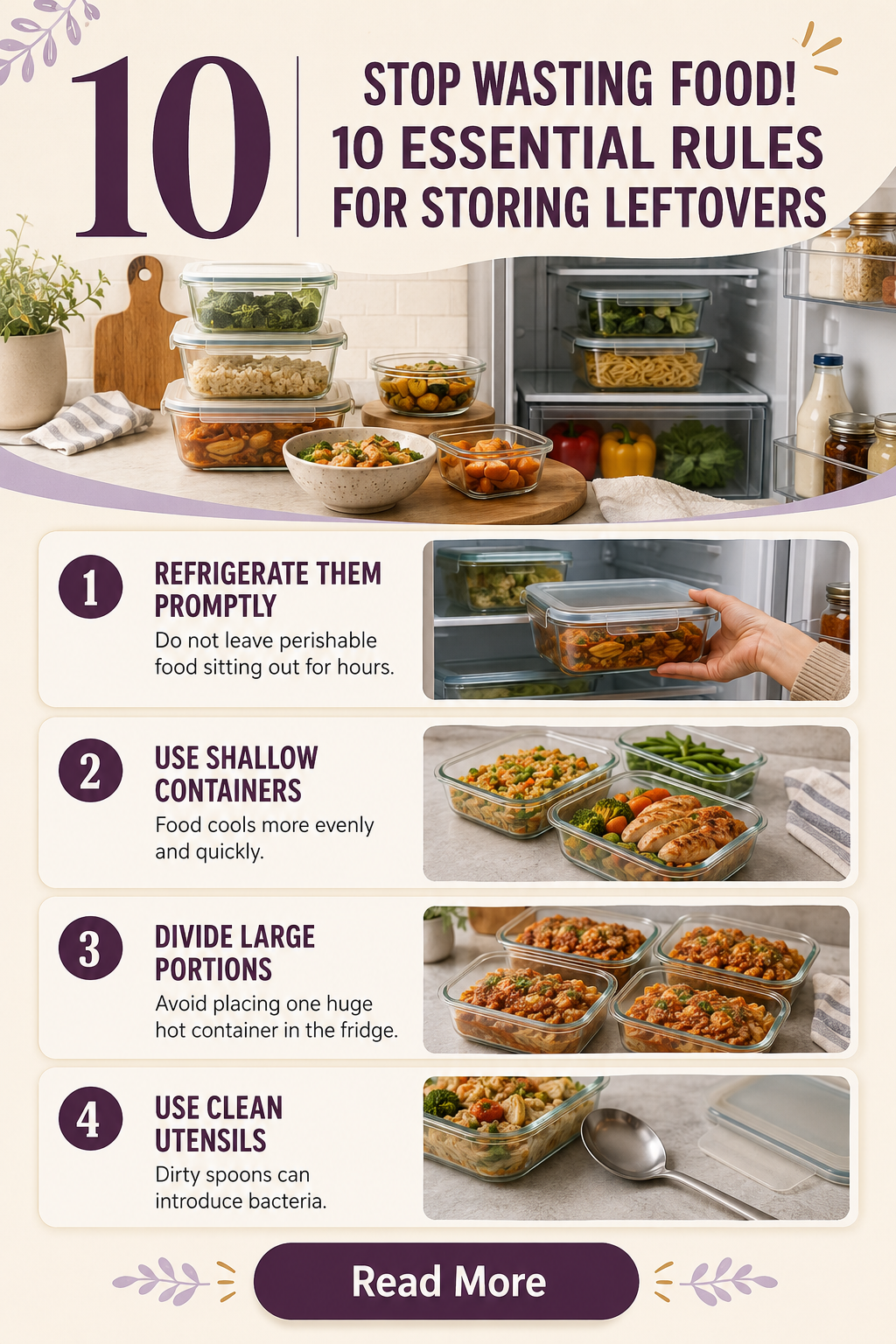
Before You Store Leftovers… Do This: 10 Essential Food Safety Rules
1. Refrigerate Them Promptly
The most critical rule of food safety is time. Bacteria multiply rapidly at room temperature. Perishable food should never be left out for more than two hours. If it is a particularly hot day, aim to get your food into the refrigerator within one hour to stop bacteria from taking hold.
2. Use Shallow Containers
When you have a large amount of leftovers, don't use a deep, tall container. Food in the center of a deep bowl takes too long to cool down, staying in the "danger zone" (where bacteria thrive) for much longer. Using shallow containers allows the food to reach a safe, cold temperature throughout much faster.
3. Divide Large Portions
Never place a massive, steaming pot of chili or soup directly into the fridge. Not only does it raise the ambient temperature of your entire refrigerator, but the middle will remain dangerously warm for hours. Divide large batches into smaller, individual portions before cooling.
4. Use Clean Utensils
It’s a common habit to use the same spoon you served with to transfer leftovers into storage containers. This can introduce new bacteria into your food. Always grab a fresh, clean utensil when packing up your meals to keep them uncontaminated for your next serving.
5. Cover Food Properly
Leftovers are magnets for odors and cross-contamination. Always use airtight lids or tightly sealed plastic wrap. This prevents your food from drying out, keeps it from picking up the scent of other items in the fridge, and protects it from any accidental drips.
6. Write the Date
You might think you’ll remember when you cooked that lasagna, but after a few days, it’s easy to lose track. Use a small piece of masking tape and a marker to write the date on the container. It takes five seconds, but it provides peace of mind every time you open the fridge.
7. Store Oldest Food in Front
Adopt the "First In, First Out" (FIFO) method. When you put new leftovers in the fridge, move the older containers to the front. This ensures you see the older food first and are reminded to eat it before opening something newer.
8. Reheat Until Steaming Hot
When it’s time to enjoy your leftovers, don't just "warm" them up. Ensure the food is heated until it is steaming hot throughout—reaching an internal temperature of at least 165°F ($74°C$). If you are using a microwave, stir the food halfway through to eliminate cold spots where bacteria might have survived.
9. Do Not Reheat the Whole Batch Repeatedly
Every time you heat and cool food, you increase the risk of bacterial growth and degrade the quality of the dish. Only remove and reheat the specific portion you intend to eat. The rest of the batch should stay safely chilled in the refrigerator.
10. Throw It Out When Unsure
The "sniff test" is not a reliable way to check for food safety. Many food-spoiling bacteria don't produce a foul smell, but they can still make you sick. If you can’t remember when you cooked it, or if it has been in the fridge for more than three or four days, it is better to be safe and toss it out.
Final Thoughts
Managing leftovers is a small effort that pays off in big ways—you save money, reduce food waste, and keep your kitchen running safely. By following these simple habits, you can enjoy your favorite meals all week long without any worry.
What is your favorite dish to turn into leftovers the next day?
Leave a Reply