
Eggs are a staple in kitchens across the globe, and for good reason—they are incredibly versatile and packed with essential nutrition. However, you have likely seen conflicting headlines about eggs over the years. Are they "good" or "bad" for you?
The reality is that eggs are a powerful food, but the overall nutritional value of your meal depends on how you cook them and what you serve them with. Here are 12 facts about eggs, separated from the hype.
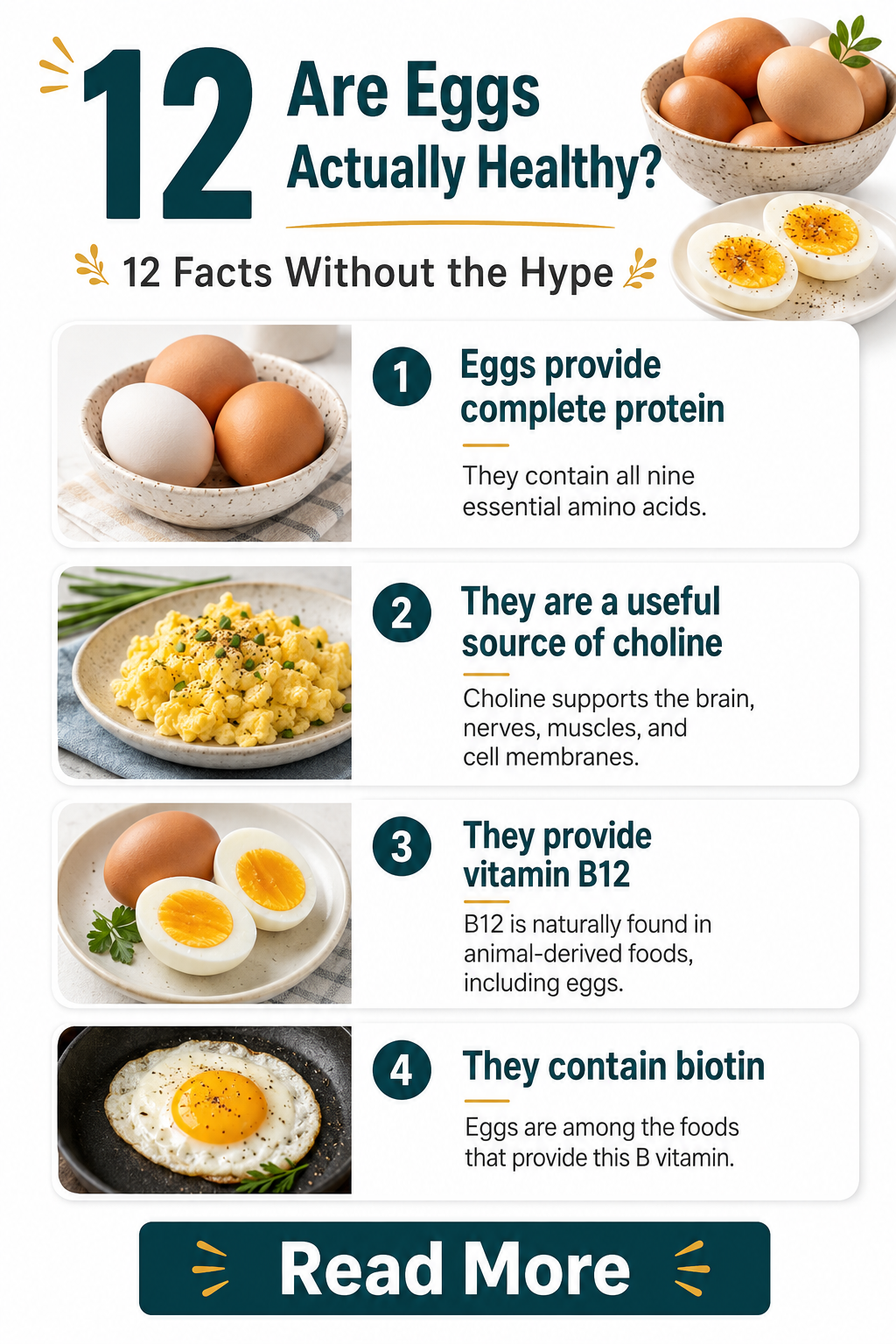
Why Eggs Are Nutrient-Dense—But Context Matters: 12 Facts Without the Hype
1. They Provide Complete Protein
Eggs are considered a high-quality protein source. They are "complete," meaning they contain all nine essential amino acids that your body needs to build and repair muscle tissue, which your body cannot produce on its own.
2. They Are a Useful Source of Choline
Choline is a critical nutrient that many people don't get enough of. It plays a vital role in supporting brain function, nervous system health, muscle movement, and the structural integrity of your cell membranes. Eggs are one of the most concentrated food sources of choline.
3. They Provide Vitamin B12
Vitamin B12 is essential for healthy nerve function and energy production. Since it is found naturally primarily in animal-derived foods, eggs serve as an excellent, accessible source of this important B vitamin.
4. They Contain Biotin
Biotin, another B vitamin, is necessary for breaking down fats and carbohydrates in the body. Eggs are one of the few natural food sources that provide a meaningful amount of biotin.
5. Most Nutrients Are Not Only in the White
While egg whites are a great low-calorie source of protein, the yolk is where the real nutrient concentration lies. The yolk houses the choline, vitamins, healthy fats, and other unique compounds that make eggs such a dense source of nutrition.
6. The Yolk Also Contains Cholesterol
One large egg yolk contains roughly 200 milligrams of dietary cholesterol. While this sounds like a lot, nutritional science has evolved significantly in how we understand the relationship between dietary cholesterol and blood cholesterol levels.
7. Dietary Cholesterol Is Not the Whole Story
For the majority of people, dietary cholesterol has a smaller impact on blood cholesterol levels than once thought. Modern research suggests that your overall dietary pattern—specifically the types of fats you consume and your fiber intake—plays a much larger role in heart health.
8. What Accompanies the Egg Matters
Context is key. An egg paired with sautéed spinach, tomatoes, and whole-grain toast creates a significantly different nutritional profile than an egg paired with heavy portions of processed bacon, sausage, and fried potatoes.
9. Cooking Method Matters
How you prepare your eggs changes the nutritional "weight" of the meal. Boiling, poaching, or scrambling with a small amount of healthy oil keeps the dish lighter compared to frying in large amounts of butter or oil.
10. Cook Eggs Safely
To reduce the risk of foodborne illness, eggs should be cooked until the yolk and white are firm. For those at higher risk—such as pregnant women, the elderly, or those with weakened immune systems—using pasteurized eggs is a smart safety precaution.
11. Refrigerate Them Promptly
Eggs are perishable. To ensure safety and prevent bacterial growth, always store your eggs in the refrigerator as soon as you get home from the store, and keep them at a consistent, cold temperature.
12. Individual Needs Differ
There is no "one-size-fits-all" nutrition advice. People managing specific health conditions, such as diabetes, high cholesterol, or cardiovascular disease, should always follow personalized guidance from their doctor or a registered dietitian regarding egg consumption.
Final Thoughts
Eggs are a nutrient-dense, affordable, and convenient way to include high-quality protein in your diet. By focusing on the context—how you cook them and what you pair them with—you can enjoy their benefits as part of a balanced, healthy eating plan.
Do you have a favorite way to prepare eggs, or are you looking for new, healthier ways to serve them?
Leave a Reply