
Your skin is the largest organ in your body, and it’s remarkably good at acting as a "diagnostic window" into your internal health. While many skin changes—like mild dryness or a common breakout—are completely harmless, there are times when your skin is trying to tell you something more important.
Learning to recognize these subtle (and not-so-subtle) signals can help you catch potential health issues early. Here are 10 skin signals that deserve your attention.
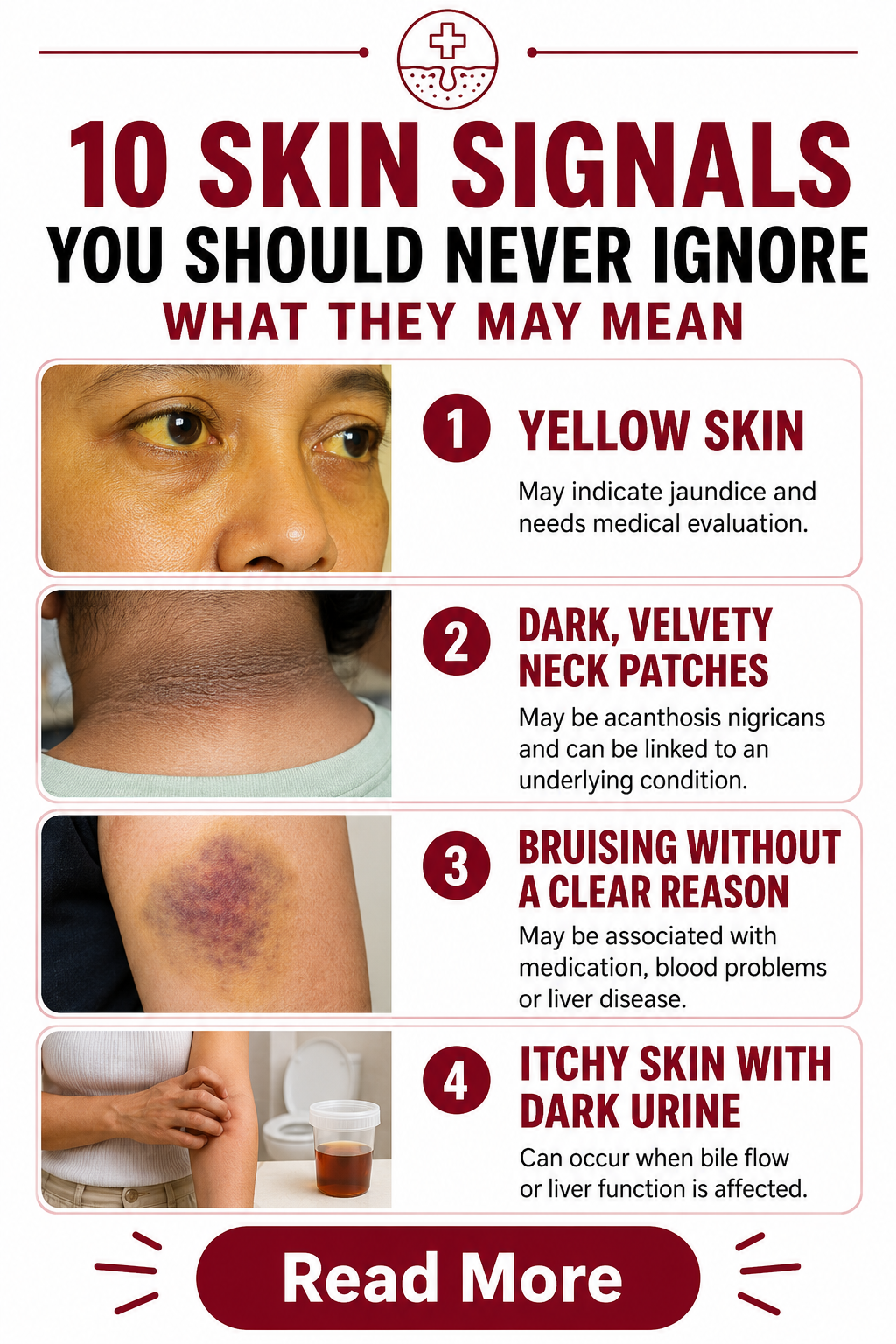
1. Yellow Skin (Jaundice)
If you notice a yellowish tint to your skin or the whites of your eyes, it is a clear indicator that something is affecting your liver or bile ducts. This condition, known as jaundice, requires prompt medical evaluation to identify the cause.
2. Dark, Velvety Neck Patches
If you notice patches of skin on your neck or armpits that appear dark, thickened, and velvety, this is often a sign known as acanthosis nigricans. It is frequently linked to insulin resistance, making it an important signal to discuss with your doctor to screen for metabolic health issues.
3. Bruising Without a Clear Reason
Everyone gets an occasional bruise from bumping into a table, but bruising easily or without any clear cause is different. Frequent or unexplained bruising can be associated with certain medications, blood clotting problems, or underlying liver issues.
4. Itchy Skin with Dark Urine
If you are experiencing persistent, generalized itchy skin paired with noticeably dark-colored urine, your liver function or bile flow may be compromised. This combination of symptoms is a strong signal that you need to see a physician.
5. A Mole That Changes
The "ABCDE" rule for moles is a vital tool for skin cancer prevention. If you notice a mole that changes in size, color, border, or shape, it should be examined by a dermatologist. Early detection is the single most effective way to treat potential skin cancers.
6. A Sore That Doesn’t Heal
Most skin injuries heal within a week or two. If you have a sore, spot, or crusty patch that refuses to heal despite proper care, it needs to be evaluated. Persistent sores can sometimes be a sign of skin cancer and should not be ignored.
7. Painful Red Lumps on the Shins
If you develop tender, red, or purple-ish lumps on the front of your shins, it may be erythema nodosum. This is often an inflammatory reaction in the fat layer of the skin, sometimes triggered by underlying inflammation or infections elsewhere in the body.
8. Blue or Gray Skin and Lips
A bluish or grayish hue to the skin and lips is a serious sign that your body is not getting enough oxygen. If this symptom is accompanied by difficulty breathing or chest pain, seek emergency medical attention immediately.
9. Itchy Rash with Swollen Lips
A sudden, itchy rash accompanied by swollen lips, wheezing, or throat tightness is a classic sign of a severe allergic reaction (anaphylaxis). This is a life-threatening emergency; call for help or go to the nearest emergency room right away.
10. Persistent Facial Redness
If you have persistent redness on your nose, cheeks, or forehead that doesn't clear up like normal acne, it may be rosacea. Rosacea is a chronic inflammatory skin condition that requires specific management, and ignoring it can lead to more severe symptoms over time.
When to See a Dermatologist
Your skin is unique to you, and you are the best person to notice when something "just doesn't look right." If you notice a change that persists, don't wait for it to go away on its own. A dermatologist can provide a professional assessment, giving you peace of mind or the treatment you need.
Disclaimer: This blog post is for informational purposes only and does not constitute medical advice, diagnosis, or treatment. Always seek the advice of your physician or other qualified healthcare provider regarding a medical condition.
Have you ever noticed a change in your skin that prompted you to look for answers, or are you just getting better at listening to what your body is telling you?
Leave a Reply