
We’ve all experienced that sinking feeling: pulling your favorite sweater out of the dryer only to find it has shrunk, or discovering a stray red sock has turned your entire load of whites into a soft shade of pink.
Laundry is a daily necessity, but a few minutes of strategic preparation can save your clothes from premature wear, color loss, and permanent damage. Before you toss your next load into the machine, run through this essential checklist to keep your wardrobe looking fresh and lasting longer.
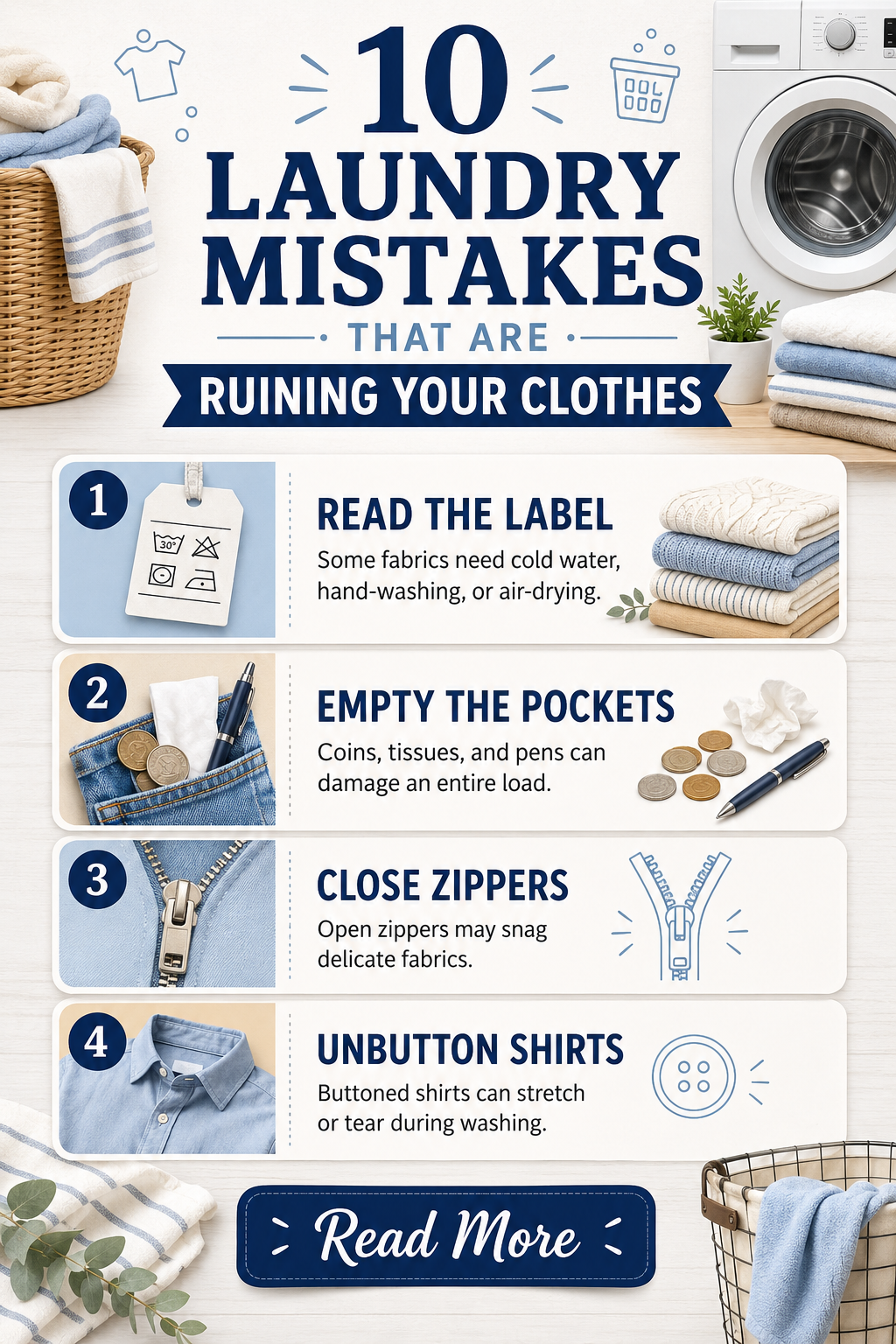
1. Read the Label First
The care instructions tag isn't just a suggestion; it’s a manual for your garment's longevity. Always check if a piece requires cold water, hand-washing, or specific air-drying methods. Ignoring these icons is the fastest way to ruin expensive fabrics or cause unexpected shrinkage.
2. Empty the Pockets
A quick "pocket audit" is the most important step in protecting your machine. Coins can damage the drum or clog the drain, while forgotten tissues will leave a trail of white confetti over your dark clothing. Even worse, an overlooked pen or lip balm can melt or leak during a hot cycle, causing irreversible stains.
3. Close All Zippers
Open zippers are surprisingly sharp. During the agitation of a wash cycle, metal teeth can easily snag and tear delicate fabrics, lace, or knitwear. Always zip up jackets, jeans, and hoodies to ensure your entire load stays safe.
4. Unbutton Your Shirts
While it might seem tidy to button shirts before washing, it actually puts unnecessary tension on the threads and the fabric around the buttonholes. Leaving shirts unbuttoned prevents the stress that leads to loose buttons or stretched-out fabric.
5. Turn Dark Clothes Inside Out
To keep your blacks and deep blues from looking washed out, turn them inside out before throwing them in the machine. This simple habit minimizes friction against the outer fibers, significantly reducing fading and the development of unsightly pilling.
6. Separate Heavy Items
Avoid washing heavy, coarse items like denim jeans or bath towels in the same load as lightweight, delicate clothing. The sheer weight and friction of heavy fabrics can cause excessive wear and tear on thinner materials, leading to premature holes or thinning.
7. Treat Stains Early
Stains are rarely "wash-and-forget." If you spot a spill, treat it as soon as possible. Fresh stains are significantly easier to lift; once they are exposed to the heat of a dryer, they often "set" into the fabric fibers, making them nearly impossible to remove later.
8. Do Not Overload
It is tempting to pack the machine to save time, but your clothes need room to move. An overloaded washer prevents items from rinsing properly and can leave soap residue on your garments. If the machine is too full, your clothes won't actually get clean.
9. Measure Your Detergent
More is not always better. Using too much detergent can lead to a buildup of residue on your clothes, which actually traps dirt and body oils, leading to stiff fabrics and unpleasant odors over time. Always follow the manufacturer’s recommended dosage for your load size.
10. Remove Clothes Quickly
Never let your wet laundry sit in the washer for hours. Damp environments are breeding grounds for mildew and bacteria. Moving your laundry to the dryer—or onto a drying rack—immediately after the cycle finishes is the best way to prevent that musty, "sour" smell.
Final Thoughts
Laundry day doesn't have to be a source of stress. By making these 10 quick checks a part of your routine, you’re not just cleaning your clothes—you’re investing in them. A little bit of care before the wash cycle goes a long way in keeping your favorite pieces in your rotation for years to come.
What is the one laundry mistake you learned to avoid the hard way?
Leave a Reply