
Your fingernails and toenails are more than just a canvas for polish—they are often a window into your overall health. Because nails grow relatively slowly, changes in their appearance can reflect nutritional deficiencies, systemic health conditions, or even environmental factors from weeks or months ago.
While most minor nail irregularities are harmless, persistent changes deserve your attention. Here are 12 nail changes and what they might be signaling.
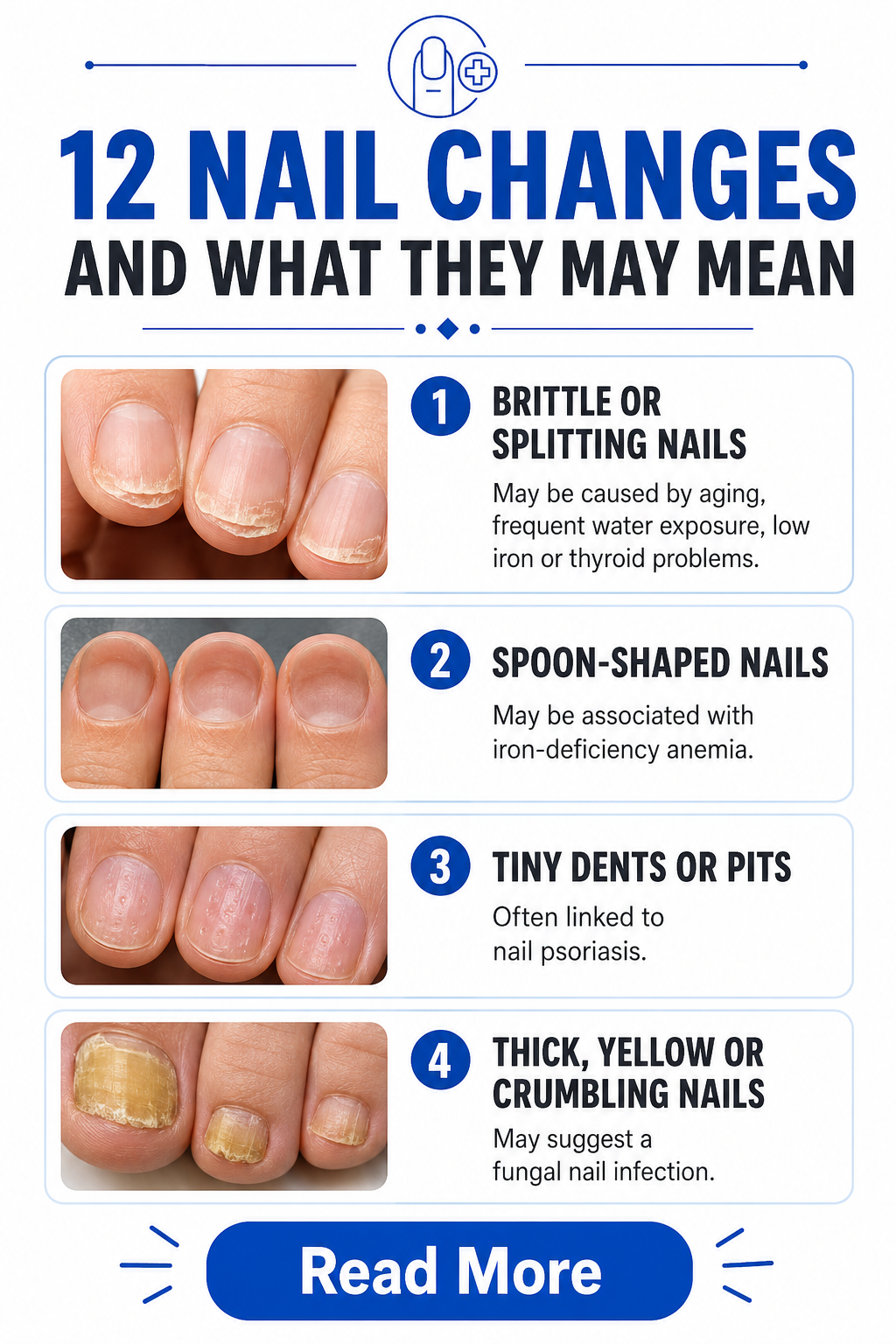
1. Brittle or Splitting Nails
If your nails frequently peel or break, it may be due to aging or excessive exposure to water and harsh cleaning chemicals. In some cases, it can also be a sign of iron deficiency or an underlying thyroid issue.
2. Spoon-Shaped Nails (Koilonychia)
If your nails appear concave or "scooped out," looking like a spoon, this is often associated with iron-deficiency anemia. If you notice this shape, a simple blood test can help determine if your iron levels are low.
3. Tiny Dents or Pits
Small, pin-sized depressions on the surface of your nails are often linked to nail psoriasis. They can look as though someone took a needle and lightly tapped the surface of the nail.
4. Thick, Yellow, or Crumbling Nails
These are classic signs of a fungal nail infection. Over time, the nail may become discolored, thickened, and brittle, making it difficult to trim. These infections often require specialized treatment to clear.
5. Nails Lifting from the Skin (Onycholysis)
When the nail plate detaches from the nail bed, it can occur after a physical injury, but it is also frequently associated with fungal infections, psoriasis, or thyroid disease.
6. Deep Horizontal Grooves (Beau’s Lines)
Deep lines running horizontally across your nails can appear after a period of severe illness, surgery, or any trauma that caused the body to pause nail growth. As the nail grows out, the line moves toward the tip.
7. Curved or Clubbed Nails
"Clubbing" refers to a condition where the tips of your fingers enlarge and the nails curve downward. Because this change can sometimes be linked to lung, heart, or liver conditions, it should always be discussed with a doctor.
8. A New Dark Vertical Streak
A dark, vertical line appearing under the nail is a change that should always be examined by a dermatologist. While often benign, it can occasionally indicate subungual melanoma, a form of skin cancer.
9. Thin Red-Brown Lines (Splinter Hemorrhages)
These look like tiny splinters beneath the nail. They are usually caused by minor physical trauma to the nail bed. In rare cases, if they appear on multiple nails, they may be associated with heart or vascular health.
10. Painful, Swollen Nail Edges
If the skin surrounding your nail is red, swollen, or painful, you likely have an infection, such as paronychia. This can be caused by bacteria or yeast entering the skin around the nail, often due to biting or aggressive cuticle trimming.
11. Small White Spots
The vast majority of small white spots on the nails are harmless. They are commonly the result of minor physical trauma—like bumping your finger—that occurred while the nail was forming.
12. Sudden Color or Shape Changes
If you notice a sudden, drastic change in the color or shape of your nails, especially if it is affecting only one nail, it deserves attention. While it may be a local issue, persistent changes should be evaluated by a healthcare professional.
When to See a Professional
Your nails are a constant part of your body; if you notice a change that persists, do not rely on self-diagnosis. A dermatologist can perform a quick exam and help determine whether your nail changes are cosmetic or a sign of something that requires treatment.
Disclaimer: This information is for educational purposes only and is not a substitute for professional medical advice, diagnosis, or treatment. Always consult with your doctor regarding any concerning changes in your health.
Have you ever noticed a change in your nails and wondered what it was, or are you just curious about how to keep them healthy?
Leave a Reply