
Your tongue is a hardworking organ that plays a vital role in eating, speaking, and tasting. Because it’s constantly exposed to the environment inside your mouth, it’s also one of the first places to show signs that something may be off in your body.
While many changes to your tongue are harmless and easily managed, some can be red flags for nutritional deficiencies or underlying health conditions. Here is what your tongue might be trying to tell you.
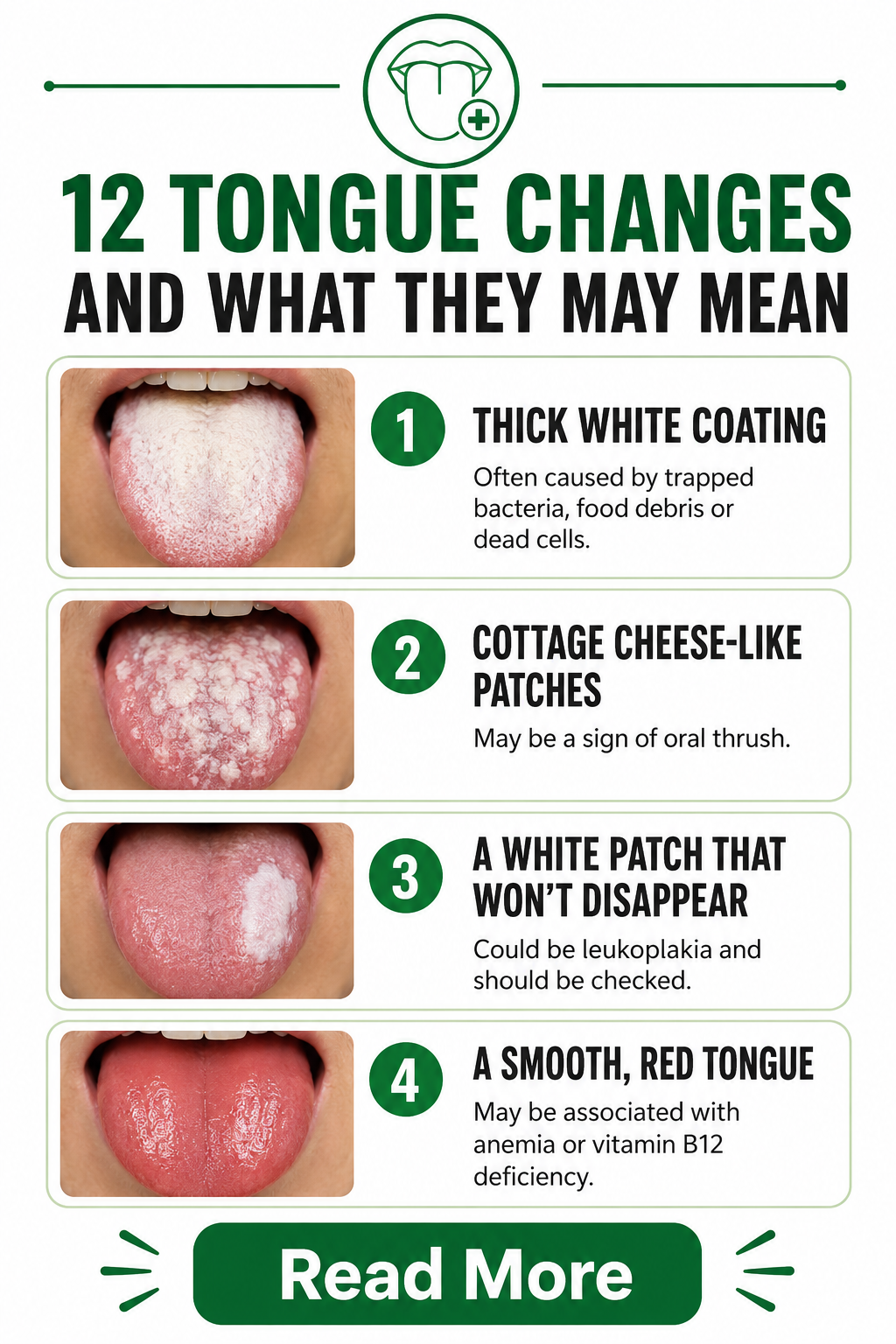
1. Thick White Coating
If you notice a thick, white layer on your tongue, it’s often just a buildup of bacteria, trapped food debris, or dead cells. This is usually easily managed with better oral hygiene, such as daily tongue brushing or using a tongue scraper.
2. Cottage Cheese-Like Patches
White patches that look like cottage cheese and can be scraped off to reveal red, irritated tissue underneath may be a sign of oral thrush. This is a yeast infection that often occurs after antibiotic use, in those with weakened immune systems, or in people who wear dentures.
3. A White Patch That Won’t Disappear
If you find a white patch that cannot be scraped off, it could be leukoplakia. This is a condition often linked to tobacco use or irritation and should be examined by a dentist to rule out the potential for precancerous cells.
4. A Smooth, Red Tongue
A tongue that looks unusually shiny, smooth, and red may be associated with nutritional deficiencies, specifically low iron or a lack of vitamin B12.
5. A Red, Bumpy “Strawberry” Tongue
A tongue that appears bright red with enlarged, bumpy taste buds—resembling a strawberry—is a classic symptom associated with scarlet fever. In rare cases, it can also be linked to Kawasaki disease or toxic shock syndrome.
6. Map-Like Red Patches
"Geographic tongue" is a harmless condition where patches of the tongue are missing their papillae (the tiny bumps). These patches often change shape and location over time, creating a map-like appearance. It is generally not a cause for concern.
7. Yellow Coating
A yellow coating on the tongue is usually the result of dead-cell buildup caused by poor oral hygiene, tobacco use, or certain medications. It is often a temporary issue that resolves with better dental care.
8. Burning Without Visible Damage
If your tongue feels like it’s burning but looks completely normal, you might be experiencing burning mouth syndrome. This can be related to nerve issues, hormonal changes, or acid reflux, and it often requires professional evaluation to identify the cause.
9. Sore Red Tongue with Fatigue
A sore, inflamed tongue accompanied by persistent fatigue can be a sign of a vitamin B12 or folate deficiency. These nutrients are essential for blood cell production and nerve health.
10. Blue, Purple, or Gray Tongue
A tongue that takes on a blue, purple, or gray hue can signal that your body isn't getting enough oxygen. If this occurs alongside breathing trouble, seek urgent medical attention.
11. An Ulcer Lasting Over Three Weeks
While minor canker sores are common, any ulcer or sore that persists for more than three weeks without healing should be examined by a dentist or healthcare professional to rule out more serious issues.
12. Color Changes That Do Not Clear
If you notice a persistent change in the color of your tongue that doesn't disappear within a couple of weeks, don't dismiss it as normal. Persistent discoloration should be evaluated during your next dental check-up.
When to Consult a Professional
Your tongue is a mirror of your oral and general health. While brushing your tongue as part of your daily routine will resolve many of these issues, persistent changes should never be ignored. If you notice something unusual that lasts for more than a few weeks, schedule an appointment with your dentist—they are experts at recognizing early signs of systemic health issues in the mouth.
Disclaimer: This blog post is for informational purposes only and does not constitute medical advice. If you have concerns about your oral health, please consult a dentist or a healthcare professional.
Do you practice daily tongue cleaning as part of your oral hygiene routine, or is this a new habit you're considering starting?
Leave a Reply