
It isn't a topic most people discuss over dinner, but your bathroom habits are one of the most reliable ways to monitor your internal health. Subtle, persistent changes in your urine or stool can often act as "early warning signals" from your body, alerting you to issues long before they manifest as more serious symptoms.
While most people experience occasional changes due to something they ate, persistent or concerning changes should never be ignored. Here are 10 bathroom changes that may be your body asking for a check-up.
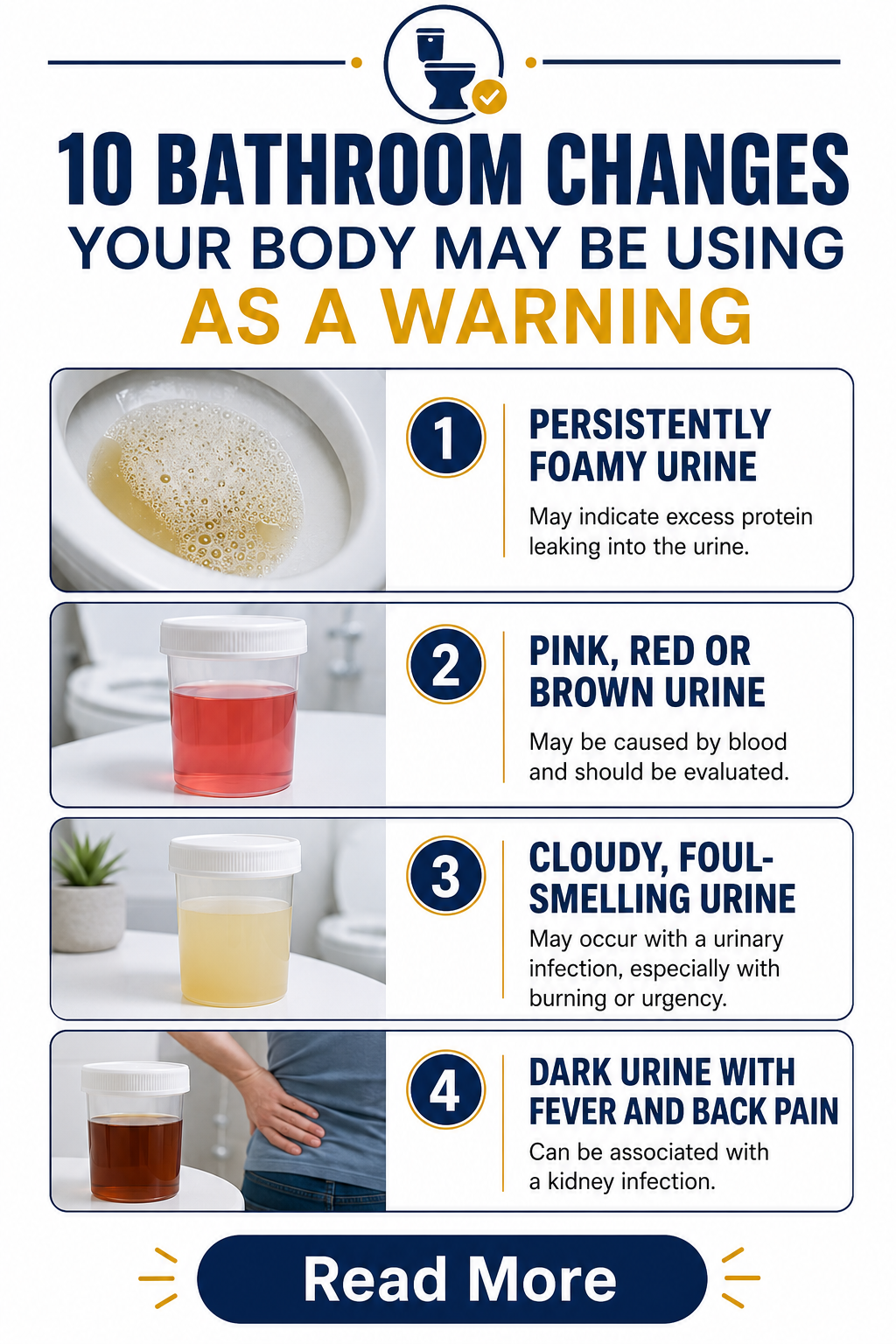
1. Persistently Foamy Urine
If you notice that your urine consistently looks bubbly or foamy, it may indicate the presence of excess protein leaking from your kidneys. This is often an early sign that your kidneys are struggling to filter your blood properly and warrants a quick conversation with your doctor.
2. Pink, Red, or Brown Urine
Urine that has a pink, red, or rust-colored hue is a classic sign that blood may be present. While this can sometimes be caused by food dyes or beets, it should always be medically evaluated to rule out infections, kidney stones, or other serious issues.
3. Cloudy, Foul-Smelling Urine
If your urine is consistently cloudy and carries a strong, unpleasant odor—especially if accompanied by burning during urination or a frequent, urgent need to go—it is a common sign of a urinary tract infection (UTI).
4. Dark Urine with Fever and Back Pain
This combination of symptoms is a major red flag. Dark-colored urine paired with fever and pain in your lower back or sides can indicate a kidney infection (pyelonephritis), which requires prompt medical treatment.
5. Dark Urine with Pale Stools
Your stool color comes from bile. If your stool is consistently pale or clay-colored, paired with dark urine, it may indicate that your bile ducts are blocked or that you are experiencing jaundice. This is a clear signal to contact your physician.
6. Greasy, Frothy Stools
Stools that appear greasy, shiny, or leave a "frothy" residue in the bowl can indicate that your body is having trouble absorbing dietary fat. This is often related to issues within the digestive tract or the way your body processes enzymes.
7. Oily Stools That Are Hard to Flush
If your stools are consistently oily and difficult to flush, it may suggest that your digestive system—specifically your pancreas—isn't producing the necessary enzymes to break down food correctly.
8. Black or Dark Red Stools
Black, tar-like stools or stools that appear bright red can be a sign of bleeding in the upper or lower digestive tract, respectively. This is a symptom that requires prompt medical advice to determine the source of the bleeding.
9. Black Stools After Bismuth Medicine
If you have recently taken bismuth subsalicylate (often used for upset stomachs), don't panic if your stool turns black. This is a common and harmless side effect of the medication that will resolve once you stop taking it.
10. Darker Stools While Taking Iron
Iron supplements are well-known for turning stools a darker color, often appearing green or black. While this is common, you should still be cautious: if your stools become tar-like, or if you notice actual blood, consult your healthcare provider to be safe.
When to Seek Help
The golden rule here is persistence. A single day of unusual bathroom habits is rarely a cause for concern, but symptoms that last for several days or appear alongside other warning signs (like pain, fever, or fatigue) are your body's way of asking for help.
Don't let embarrassment keep you from getting the care you need. Your doctor hears about these concerns every day—and addressing them early is the smartest way to protect your long-term health.
Disclaimer: This blog post is for informational purposes only and does not constitute medical advice, diagnosis, or treatment. Always consult with your doctor or healthcare professional regarding any changes in your health.
Do you make it a habit to pay attention to these signals, or is this a new way of looking at your health that you’re just starting?
Leave a Reply