
The mouth is a primary gateway to your overall health. Because we use it constantly for eating, speaking, and breathing, we are often the first to notice when something feels "off." While many minor mouth issues are temporary, certain changes are indicators that your body needs a bit of extra help.
Paying attention to your oral health is about more than just a bright smile; it’s about identifying patterns that might require professional intervention. Here are 10 mouth changes you should never ignore.
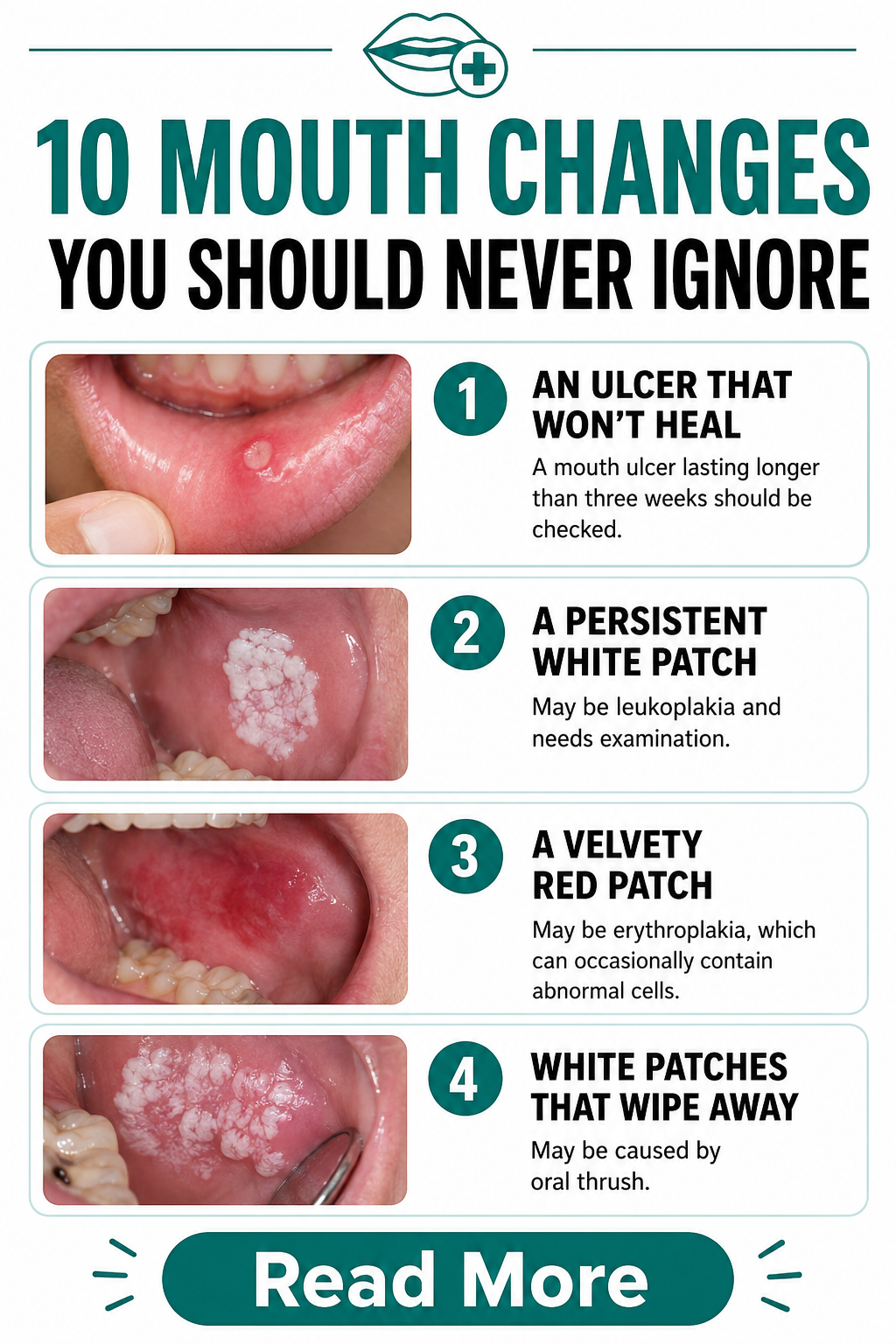
1. An Ulcer That Won’t Heal
We’ve all had the occasional canker sore, which usually heals within a week or two. However, any mouth ulcer or sore that persists for longer than three weeks should be checked by a dentist or healthcare provider to rule out underlying issues.
2. A Persistent White Patch
If you notice a white patch inside your mouth—often on the tongue or inner cheek—that cannot be scraped away, it could be leukoplakia. This is a condition that requires professional examination to ensure it is not precancerous.
3. A Velvety Red Patch
While less common than white patches, a smooth, velvety red patch (known as erythroplakia) is often more concerning. These patches can occasionally contain abnormal cells and should be evaluated promptly by a dental professional.
4. White Patches That Wipe Away
If you have white, curd-like patches that can be wiped away (often revealing red, irritated tissue underneath), this may be oral thrush. It is a common yeast infection that frequently occurs after antibiotic use or in individuals with a weakened immune system.
5. Daily Burning or Scalding Sensation
If your mouth feels like it has been scalded by hot coffee on a daily basis, even when you haven't consumed anything hot, you may be experiencing burning mouth syndrome. This can be related to nerve issues, hormonal changes, or acid reflux, and it requires professional diagnosis to find the right treatment.
6. Constant Dryness
Occasional dry mouth is normal, but constant, persistent dryness can be uncomfortable and damaging to your teeth. It is often linked to side effects from medications, chronic dehydration, or reduced saliva production due to medical conditions.
7. Blue or Gray Lips
Changes in lip color can be a systemic health indicator. A bluish or grayish hue may signal that your body is not getting enough oxygen. If this occurs alongside any difficulty breathing, seek urgent medical attention.
8. Suddenly Swollen Lips or Tongue
A sudden swelling of the lips, tongue, or throat is a classic sign of a severe allergic reaction (anaphylaxis). This is a life-threatening emergency; please seek immediate emergency care if you experience this.
9. Persistent Numbness or Tingling
If you notice an unexplained sensation of numbness, tingling, or "pins and needles" in your lips, tongue, or mouth that does not go away, it should be discussed with a healthcare professional to identify the underlying cause.
10. A Constant Bitter or Metallic Taste
If you constantly notice a metallic or bitter taste that doesn't seem to have a food source, it may be a side effect of a new medication, a sign of a specific oral condition, or related to burning mouth syndrome.
When to Call Your Dentist
Your mouth is a mirror of your systemic health. While a good dental hygiene routine—brushing twice a day and flossing—is your first line of defense, it doesn't replace the need for professional check-ups. If you notice any of the changes above that persist for more than a couple of weeks, don't wait for your next annual cleaning—schedule an appointment to get it evaluated sooner.
Disclaimer: This blog post is for informational purposes only and does not constitute medical advice, diagnosis, or treatment. Always seek the advice of your dentist or another qualified healthcare provider with any questions regarding your oral health.
When was the last time you had a comprehensive oral health exam, and have you noticed any changes in your mouth lately that you’ve been meaning to ask about?
Leave a Reply