
A full night in bed does not always guarantee restful sleep. You may sleep for several hours but still wake up feeling drained, unfocused or unusually irritable.
Most adults need at least seven hours of sleep, but quality matters too. Repeated waking, difficulty falling asleep and feeling tired after sleeping can all suggest that your rest is not as refreshing as it should be.
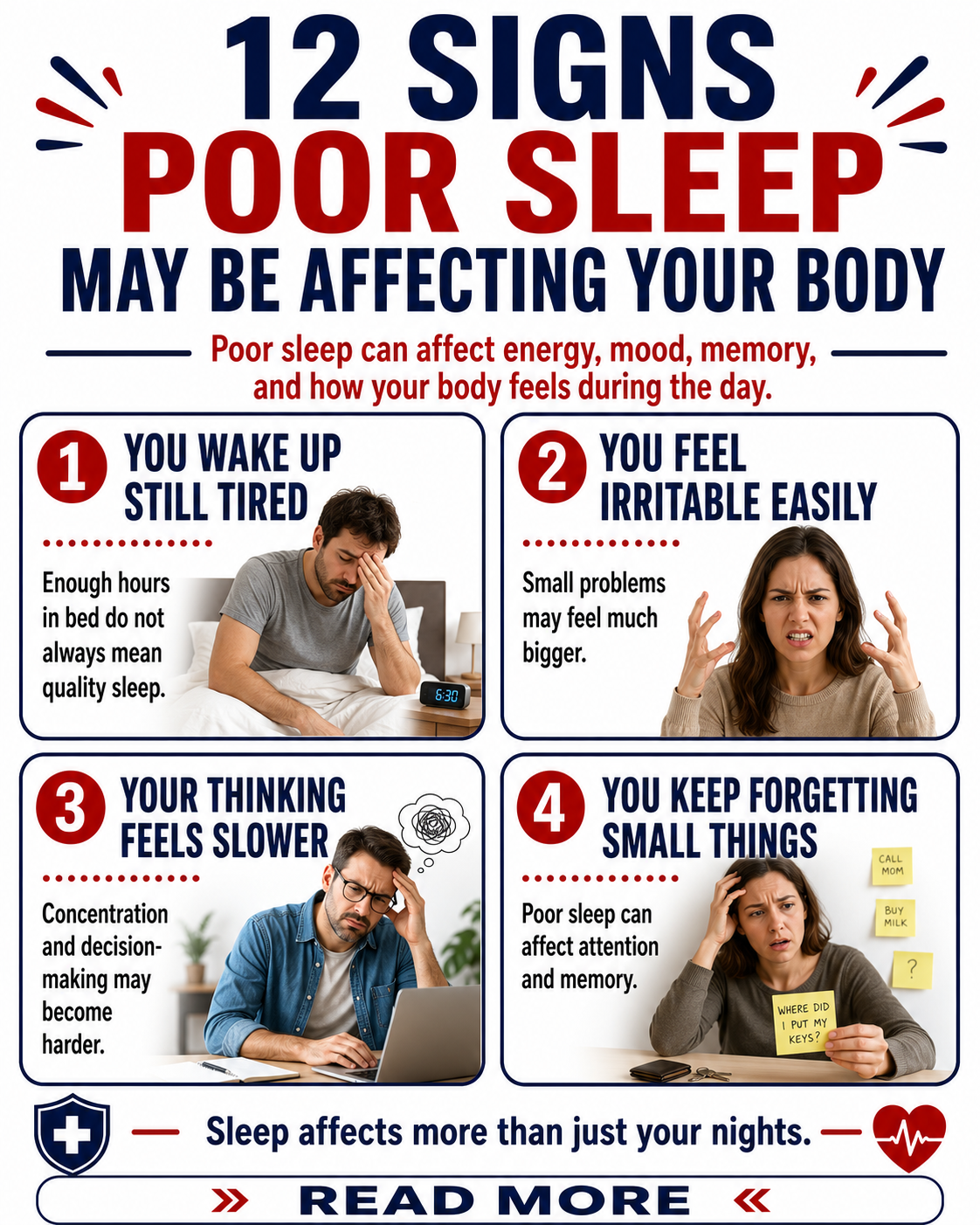
Here are 12 signs that poor sleep may be affecting how you feel during the day.
1. You Wake Up Still Tired
You open your eyes, but your body feels as though it never fully rested. This may happen when sleep is frequently interrupted or you are not spending enough time in restorative sleep stages.
Feeling unrefreshed after waking is a common sign of sleep deficiency, even when you believe you spent enough hours in bed.
2. You Feel Irritable Easily
Small delays, noises or disagreements may feel more frustrating after a poor night’s sleep.
Sleep helps the brain manage emotions and cope with everyday changes. When you are sleep-deprived, you may feel more impatient, worried or emotionally reactive than usual.
3. Your Thinking Feels Slower
Tasks that normally feel simple may suddenly require extra effort. You may reread the same sentence, struggle to organize your thoughts or take longer to make decisions.
Poor sleep can affect focus, problem-solving and reaction time, making daily responsibilities feel more demanding.
4. You Keep Forgetting Small Things
Misplacing your keys once is normal. However, frequently forgetting appointments, names or what you were about to do may be connected to poor attention caused by tiredness.
Sleep supports learning and memory formation. Without enough quality rest, the brain may have more difficulty storing and recalling information.
5. You Feel Sleepy During Quiet Activities
You may start nodding off while reading, watching television, sitting in a meeting or riding in a car.
Regularly struggling to stay awake during calm daytime activities can indicate that your body is not getting the rest it needs.
6. You Make More Mistakes
Poor sleep can make it harder to notice details. You may send messages with errors, overlook instructions or forget part of a familiar task.
Sleep deficiency can slow performance and increase the likelihood of mistakes at work, while studying or during everyday activities.
7. Your Reaction Time Feels Slower
You may respond more slowly while driving, exercising or handling something unexpectedly.
Tiredness can reduce alertness and cause brief periods of unintended sleep called microsleeps. This is especially dangerous behind the wheel or while operating equipment.
8. You Feel Hungrier Than Usual
After a poor night, snacks and high-calorie foods may seem harder to resist.
Sleep helps regulate hormones associated with hunger and fullness. When sleep is consistently inadequate, appetite may feel more difficult to control.
9. Your Usual Workout Feels Harder
Exercise may feel more exhausting when your body has not recovered properly. You might have less motivation, reduced coordination or difficulty completing your usual routine.
Rather than pushing through severe tiredness, consider choosing lighter movement and prioritizing recovery.
10. You Depend on Caffeine to Function
Needing several coffees or energy drinks simply to feel normal may be your body’s way of compensating for insufficient rest.
Caffeine can temporarily increase alertness, but consuming it late in the day may make it harder to fall asleep, continuing the cycle.
11. You Seem to Get Sick More Often
Sleep supports the body’s natural defenses. Ongoing sleep deficiency may make it harder for the immune system to respond effectively to common infections.
Sleep is not a replacement for medical care, but it remains an important part of maintaining overall health.
12. Your Mood and Motivation Have Changed
You may feel less interested in activities you normally enjoy or find it harder to begin simple tasks.
Occasional low motivation can happen to anyone. However, ongoing sleep problems combined with persistent sadness, anxiety or loss of interest should be discussed with a healthcare professional.
This article is for general educational purposes and is not a substitute for medical advice, diagnosis or treatment.
Leave a Reply