
Our eyes are perhaps our most valuable sensory organs, yet many people ignore subtle and not-so-subtle changes in their vision until a problem becomes severe. While minor eye strain is common in our digital age, certain symptoms are significant warning signs that require professional intervention.
Because eye-related complications can progress quickly, knowing the difference between "routine fatigue" and a medical emergency is vital. Here are 10 eye changes you should never ignore.
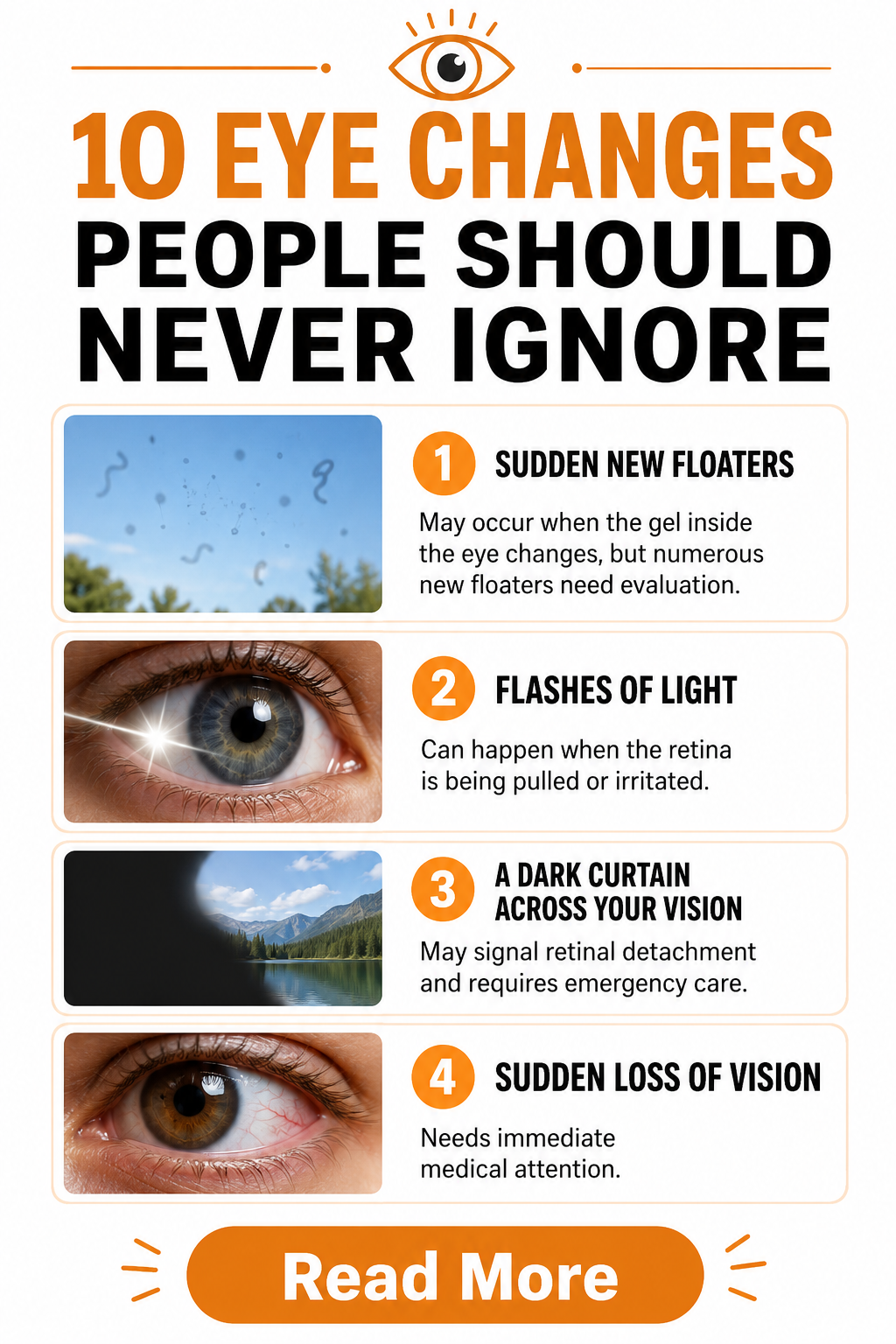
1. Sudden New Floaters
If you suddenly notice a swarm of new "floaters"—small specks, dots, or cobweb-like shapes drifting across your vision—it could be a sign that the vitreous gel inside your eye is shrinking or detaching from the retina. While some floaters are harmless, a sudden increase requires an evaluation by an eye doctor to ensure your retina is safe.
2. Flashes of Light
Seeing flashes of light, even when your eyes are closed, can happen when the retina is being physically pulled or irritated. Think of it as a mechanical signal that your retina is under tension. This is a classic warning sign that needs immediate medical assessment.
3. A "Dark Curtain" Across Your Vision
If you experience the sensation of a dark shadow, veil, or "curtain" moving across your field of vision, this may signal a retinal detachment. This is a true medical emergency, and you should seek professional care immediately to prevent permanent vision loss.
4. Sudden Loss of Vision
Any sudden, unexplained loss of vision—whether in one eye or both—is a high-priority emergency. It can be caused by various issues, including vascular problems, and requires immediate medical attention to determine the cause.
5. Eye Pain with Blurred Vision
Blurred vision on its own is often just a sign that you need an updated eyeglass prescription. However, when it is accompanied by acute eye pain, it can indicate a more serious underlying condition, such as acute angle-closure glaucoma, which can damage the optic nerve quickly.
6. Redness with Light Sensitivity
While mild redness can be caused by allergies, persistent redness paired with painful sensitivity to light (photophobia) should be checked promptly. These symptoms can indicate an inflammatory condition inside the eye that needs treatment to prevent further damage.
7. Yellow "Whites" of the Eyes
The sclera (the white part of your eye) should ideally be clear. If it takes on a yellowish tint, it can be a sign of jaundice—a condition often linked to liver dysfunction or gallbladder issues. This is a systemic health signal that requires a visit to your primary care physician.
8. Vision Changes After an Eye Injury
Even if an injury seems minor, any change in vision that follows a hit to the eye or a foreign object entering the eye should be treated as urgent. Injuries can lead to internal swelling or bleeding that may not be immediately visible from the outside.
9. Pain and Redness After Eye Surgery
If you have recently undergone eye surgery (such as cataract removal) and begin experiencing new pain or increased redness, it could indicate an internal eye infection (endophthalmitis). Do not wait for your next scheduled follow-up; contact your surgeon’s office immediately.
10. Floaters Accompanied by Flashes and Vision Loss
If you experience a combination of new floaters, flashes of light, and a noticeable decrease in vision, it is highly suggestive of a retinal tear or detachment. This is the "triple threat" of eye symptoms and necessitates an urgent trip to an ophthalmologist or an emergency room.
When to Seek Emergency Care
Your eyesight is not something to "wait and see" about. If you experience any of the symptoms listed above, the best course of action is to contact an eye care professional (optometrist or ophthalmologist) as soon as possible. When in doubt, it is always better to be evaluated and receive a "clean bill of health" than to risk your long-term vision.
Disclaimer: This blog post is for informational purposes only and does not constitute medical advice, diagnosis, or treatment. If you are experiencing a vision emergency, please contact a healthcare professional immediately.
Have you ever had your eyes examined, and do you know when your last comprehensive eye check-up was?
Leave a Reply