
Turning 40 does not cause your body to change overnight. There is no biological switch that suddenly flips on your birthday.
Still, many people begin noticing subtle differences during their 40s. Reading small print may become harder. Workouts can feel more demanding. Sleep may become lighter, and maintaining the same weight may require more attention than it once did.
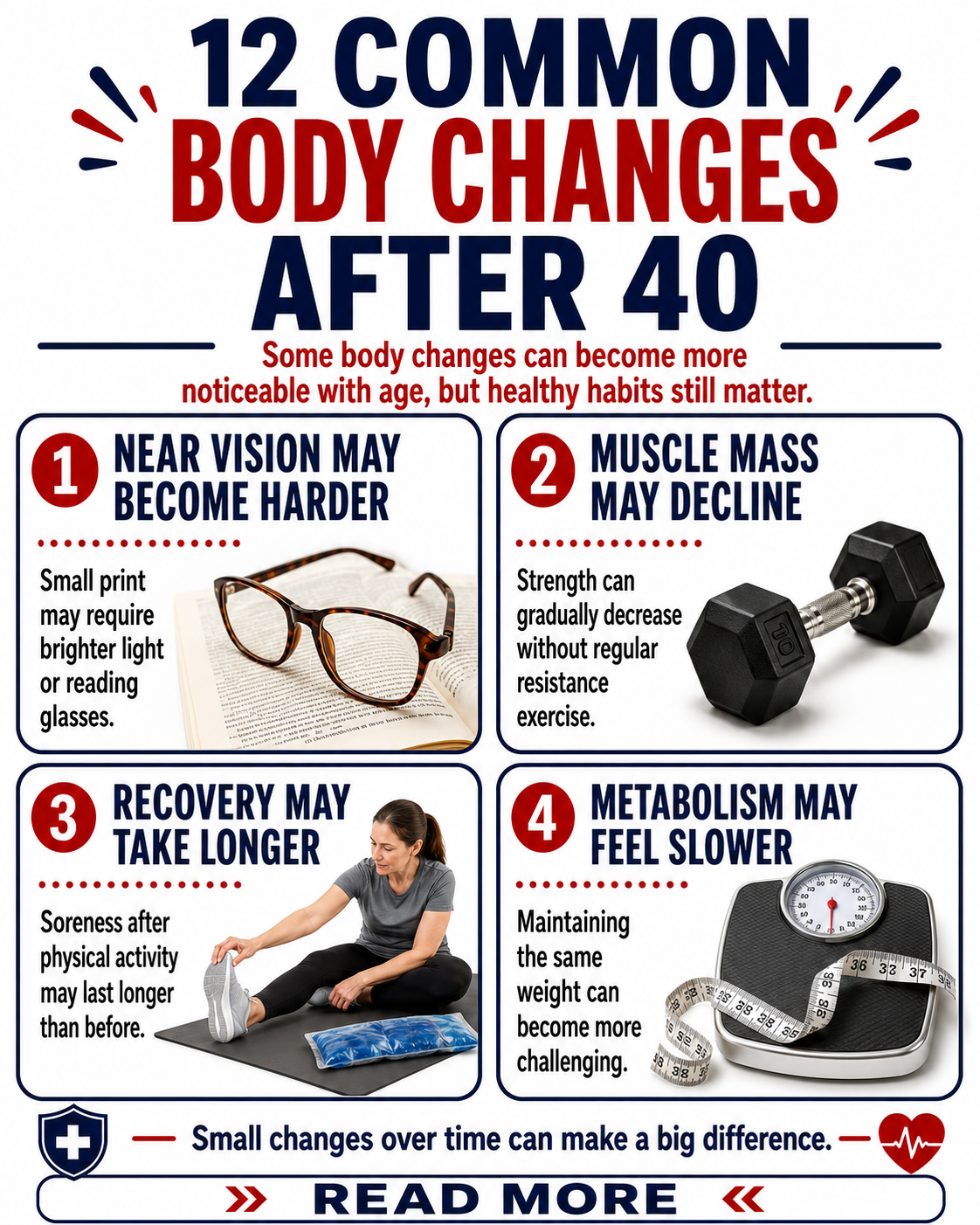
These changes do not mean that your healthiest years are behind you. In many cases, everyday habits such as strength training, regular movement, balanced meals, quality sleep and routine health checks can make a meaningful difference.
Here are 12 common body changes that may become more noticeable after 40.
1. Near Vision May Become Harder
One of the first changes many people notice is difficulty reading small text. You may find yourself holding a menu farther away, increasing the font size on your phone or looking for brighter light.
This age-related change is known as presbyopia. It happens because the natural lens inside the eye becomes less flexible, making it harder to focus on nearby objects. It commonly becomes noticeable during the mid-40s.
Reading glasses, prescription lenses or other vision-correction options can usually help. Regular eye examinations are also important because not every change in vision should automatically be blamed on age.
2. Muscle Mass and Strength May Gradually Decline
Muscle strength does not disappear the moment you turn 40, but maintaining it may require more effort.
Muscle mass and physical performance generally reach their highest levels during early adulthood and can gradually decline afterward. Inactivity can speed up the process, while resistance exercise can help preserve strength and physical function.
Activities such as lifting weights, using resistance bands, performing bodyweight exercises or carrying groceries can all challenge the muscles. The best routine is one that matches your fitness level and can be followed consistently.
3. Exercise Recovery May Feel Different
A hard workout that once caused one day of soreness may now leave you feeling stiff for longer. However, age is not the only factor involved.
Sleep quality, training intensity, nutrition, stress, hydration and how regularly you exercise can all influence recovery. Research on age and post-exercise muscle soreness is mixed, so slower recovery should not simply be accepted as unavoidable.
Allow time between demanding sessions, increase workout intensity gradually and pay attention to persistent pain. Normal muscle soreness should improve. Sharp, worsening or long-lasting pain may need professional assessment.
4. Maintaining the Same Weight May Become More Challenging
People often say that metabolism suddenly slows after 40, but the full picture is more complicated.
A large study found that energy expenditure adjusted for body size remains relatively stable from early adulthood to around age 60. However, changes in activity, muscle mass, sleep, hormones, eating patterns and daily routines can still make weight management feel more difficult.
Instead of relying on extreme diets, focus on habits that can be maintained: regular movement, adequate protein, fiber-rich foods, reasonable portions and fewer liquid calories.
5. Sleep May Become Lighter or More Interrupted
Adults do not necessarily need less sleep as they age. Most still need approximately seven to nine hours, although getting uninterrupted sleep may become more difficult.
Some people begin waking earlier, waking more frequently during the night or feeling more sensitive to noise and temperature. Stress, pain, medications, alcohol, snoring and hormonal changes may also interfere with sleep.
A regular bedtime, a dark bedroom, daytime activity and limiting late caffeine may help. Persistent insomnia, loud snoring or daytime exhaustion deserves attention rather than being dismissed as normal aging.
6. Skin May Feel Drier and Less Elastic
Skin gradually produces less oil and may become thinner, drier or more fragile. Lower levels of collagen and elastin can also make fine lines and changes in texture more visible.
Sun exposure plays a major role in how quickly these changes appear. Years of ultraviolet exposure can contribute to uneven pigmentation, wrinkles and increased skin-cancer risk.
Daily sun protection, gentle cleansing and regular moisturizing can support the skin barrier. A new mole, a changing spot or a wound that does not heal should be checked by a qualified healthcare professional.
7. Bone Density May Begin to Decrease
Bones are living tissue that constantly breaks down and rebuilds. With age, the balance may gradually shift toward greater bone loss.
The process often causes no obvious symptoms. That is why osteoporosis is sometimes called a silent disease—it may remain unnoticed until a fracture occurs. Hormonal changes during and after menopause can increase bone loss for many women.
Weight-bearing activity, resistance exercise and adequate nutrition can support bone health. Whether you need a bone-density test depends on factors such as age, medical history, medications and fracture risk.
8. Joints May Feel Stiffer
You may notice stiffness after sitting for a long time, getting out of bed or completing an unfamiliar activity. This does not always mean that something is seriously wrong, but recurring pain should not be ignored.
Osteoarthritis becomes more common with age and can cause pain, reduced movement and temporary stiffness after rest. Regular exercise is commonly used to improve flexibility, muscle support and joint function.
Low-impact activities such as walking, swimming, cycling and controlled strength training may be easier on sensitive joints. Sudden swelling, redness, warmth or severe pain needs medical evaluation.
9. Hearing May Become Less Sharp
Age-related hearing loss usually develops gradually, which means it can be easy to miss.
You may notice that conversations become difficult in crowded rooms, television volume keeps increasing or certain voices sound unclear. Hearing changes commonly affect both ears and may interfere with communication and awareness of alarms or warning sounds.
Reducing exposure to loud noise and using hearing protection can help protect the hearing you have. A hearing test can identify changes before they seriously affect daily life.
10. Balance May Require More Attention
Balance depends on several systems working together, including vision, muscles, joints, the inner ear and the brain. Changes in any of these areas may make balance feel less automatic.
Medications and medical conditions can also contribute to dizziness or unsteadiness, so frequent balance problems should not be written off as simply getting older.
Strength exercises, walking, yoga and tai chi may help maintain stability and confidence. Supportive footwear, good lighting and removing household trip hazards are also practical precautions.
11. Memory Recall May Occasionally Take Longer
Walking into a room and briefly forgetting why you went there can happen at many ages. During midlife and later adulthood, names or details may sometimes take longer to recall.
Mild forgetfulness can be part of normal aging, especially when someone is tired, stressed or distracted. However, memory problems that interfere with familiar tasks, financial decisions, driving or communication are not something to ignore.
Sleep, physical activity, social connection and learning new skills all support overall brain health. A noticeable or rapidly worsening change should be discussed with a healthcare professional.
12. Hormonal Changes May Become More Noticeable
For many women, the menopausal transition begins between ages 45 and 55. During this time, changing hormone levels may affect menstrual cycles, sleep, mood, body composition and temperature regulation.
Men can also experience gradual hormonal changes with age, although symptoms and hormone levels vary widely. Low energy, changes in sexual function or reduced strength can have several possible causes and should not automatically be treated with hormone supplements. Research on testosterone treatment has found potential benefits as well as important uncertainties and risks.
Personalized medical advice is safer than trying hormones or “anti-aging” products without proper testing.
Healthy Habits Matter More Than the Number on Your Birthday
Aging is influenced by much more than your chronological age. Genetics matter, but so do activity, food choices, sleep, stress, smoking, alcohol use, medical care and the environment around you.
A useful approach after 40 is to concentrate on a few basic habits:
- Keep moving throughout the day.
- Include resistance, aerobic and balance activities.
- Eat enough protein, vegetables, fruit and fiber-rich foods.
- Protect your skin and hearing.
- Schedule recommended health, dental, vision and hearing checks.
- Treat ongoing symptoms instead of assuming they are normal.
Healthy aging is not about trying to look 20 forever. It is about protecting your strength, independence and quality of life for the years ahead. Research supported by the National Institute on Aging emphasizes that regular activity, nourishing food, sufficient sleep and proactive healthcare can all support healthier aging.
When Should You Speak to a Doctor?
Gradual changes can be common, but sudden or severe symptoms deserve prompt attention. Contact a healthcare professional when a change is persistent, worsening, painful or interfering with normal activities.
Unexplained weight loss, sudden vision changes, new weakness, severe dizziness, chest discomfort, unusual bleeding or major memory changes should not be dismissed as “just getting older.”
Frequently Asked Questions
Is it normal to feel different after turning 40?
It can be normal to notice gradual changes in vision, recovery, sleep, body composition or skin. However, 40 is not a fixed deadline, and every person ages differently.
Is weight gain after 40 unavoidable?
No. Changes in muscle mass, activity, hormones, sleep and eating habits may affect weight, but weight gain is not guaranteed. Sustainable daily habits are generally more useful than crash diets.
Can muscle be built after 40?
Yes. Adults can improve strength and physical function through appropriately designed resistance training. Start at a manageable level and increase the challenge gradually.
Should every symptom be blamed on aging?
No. Aging may explain some gradual changes, but it should not be used as a blanket explanation for ongoing pain, extreme tiredness, sudden weakness or major changes in normal function.
This article is for general educational purposes and is not a substitute for personal medical advice, diagnosis or treatment.
Leave a Reply