
The kitchen is the heart of your home, but it is also the place where hygiene matters most. While most of us have a routine for wiping down counters, kitchen cleaning involves more than just a quick spray and a swipe. To keep your kitchen truly sanitary and safe for food preparation, you need a strategy that goes beyond the surface.
Before you grab your cleaning supplies, review these 10 essential rules to ensure your kitchen is as clean as it looks.
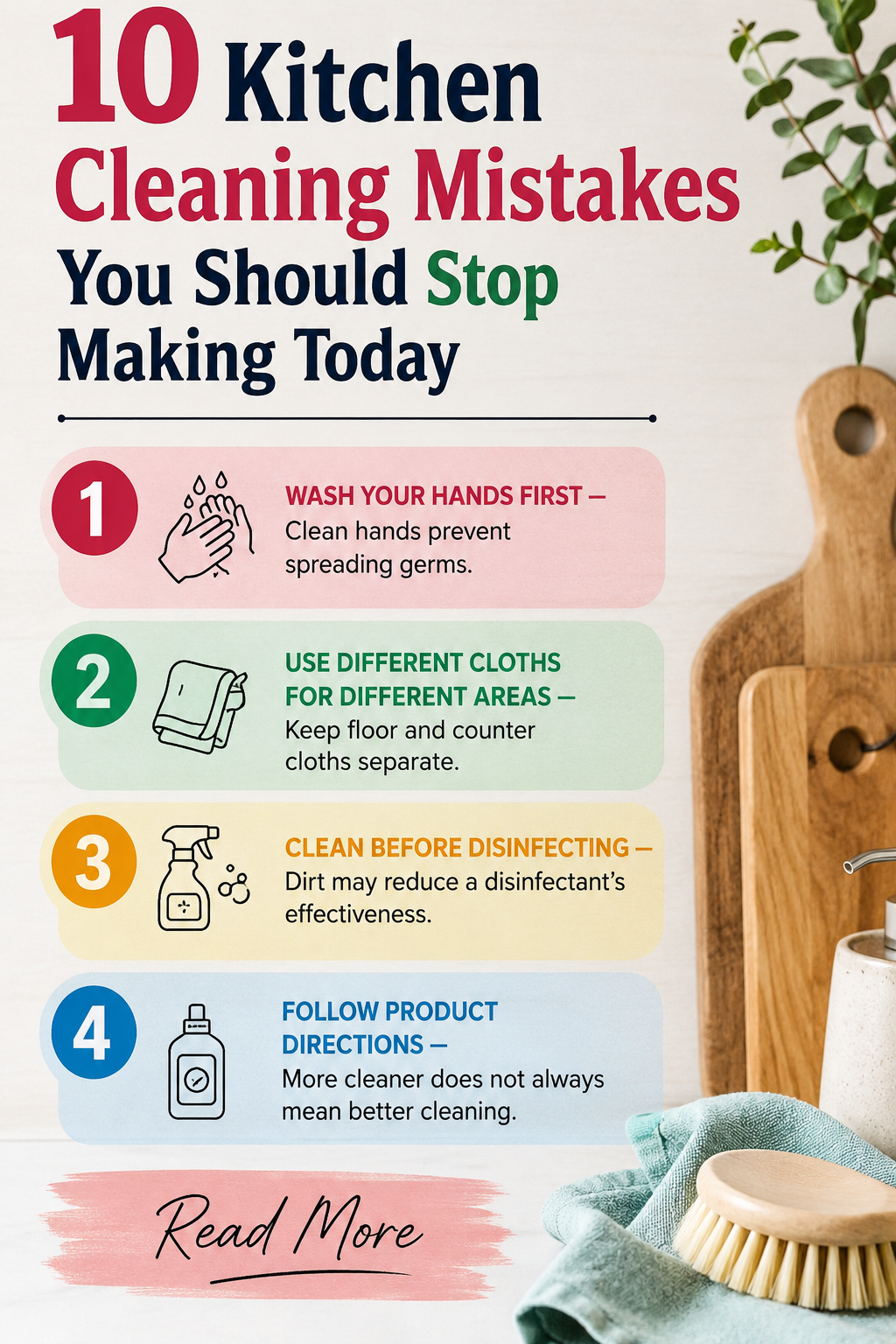
Before You Clean Your Kitchen… Read This: 10 Essential Rules for a Safer Space
1. Wash Your Hands First
It might sound basic, but you should always start by washing your own hands. You don't want to transfer bacteria from your hands onto the very surfaces you are about to sanitize. Proper hygiene begins with the cleaner!
2. Use Different Cloths for Different Areas
Avoid the common mistake of using the same rag to wipe your kitchen table and your floor. Keep your cleaning cloths color-coded or strictly separated: one set for food-contact surfaces (counters/tables) and another for non-food surfaces (floors/exterior appliances). This prevents cross-contamination.
3. Clean Before Disinfecting
Disinfectants work best on surfaces that are already clean. If there is visible dirt, grease, or food residue, the disinfectant may not be able to reach the surface properly. Always wipe away the "gross" dirt with soapy water first, then follow up with your disinfectant spray.
4. Follow Product Directions
We often assume that using more product will get a better result, but that isn't the case. Using too much cleaner can leave a sticky, slippery residue that actually attracts more dirt. Always follow the manufacturer's recommended amount and usage instructions.
5. Never Mix Cleaning Chemicals
This is the most important safety rule. Never combine different cleaning products—especially bleach and ammonia—as they can create toxic gases that are dangerous to inhale. Always use one product at a time and ensure your kitchen is well-ventilated while you clean.
6. Wash the Sink
We use the sink to wash our dishes and rinse our food, yet many people forget to clean the sink itself. Food particles and grease can get trapped in the drain, leading to odors and bacteria buildup. Scrub your sink thoroughly with a mild abrasive or soap and water after you finish your other cleaning tasks.
7. Replace Dirty Sponges
Your sponge is often the dirtiest item in the kitchen. If it smells "off" or "sour," it is a clear sign that it is harboring bacteria. Replace your sponges regularly—at least every two weeks—or wash them in the dishwasher on a high-heat cycle to sanitize them.
8. Wipe Handles and Switches
We touch refrigerator handles, cabinet knobs, and light switches dozens of times a day, often while cooking. These "high-touch" points are frequently ignored during routine cleanings. Make a habit of wiping them down regularly to stop the spread of germs.
9. Clean the Cutting Board Properly
Cutting boards, especially those used for raw meat, poultry, or fish, require extra care. Always wash them with hot, soapy water immediately after use. If you use wood boards, ensure they are oiled regularly; for plastic, ensure they are sanitized to prevent bacteria from settling into deep knife grooves.
10. Let Surfaces Dry
Bacteria and mold love moisture. After cleaning your sink, counters, or faucet, take an extra moment to wipe them dry with a clean cloth or let them air dry completely. Keeping surfaces dry is one of the most effective ways to prevent the growth of unwanted microbes.
Final Thoughts
A truly clean kitchen isn't just about appearances; it’s about creating a safe environment for you and your family. By following these 10 habits, you make your cleaning routine more efficient, safer, and much more effective. Your kitchen will look better, smell fresher, and—most importantly—be ready for your next culinary adventure.
Which of these cleaning steps is the one you usually forget to do?
Leave a Reply